
It’s common for coaches and mentors to feel frustrated that it is obvious what the client needs to do, yet somehow the client can’t move from awareness to action. Of course, everyone has occasions when they know they should take action, but can’t find the energy to do so. But how do we help shift happen?
The comfort-curiosity matrix is a tool developed by CCMI to help understand what is holding someone back – and therefore what help they may need.
Comfort refers to presence or absence of pain. High comfort predisposes us to inaction; high discomfort predisposes us to action. High curiosity is about being open to the possibilities of a new state and motivated to explore it. Low curiosity leads us to shut out disruptive thoughts.
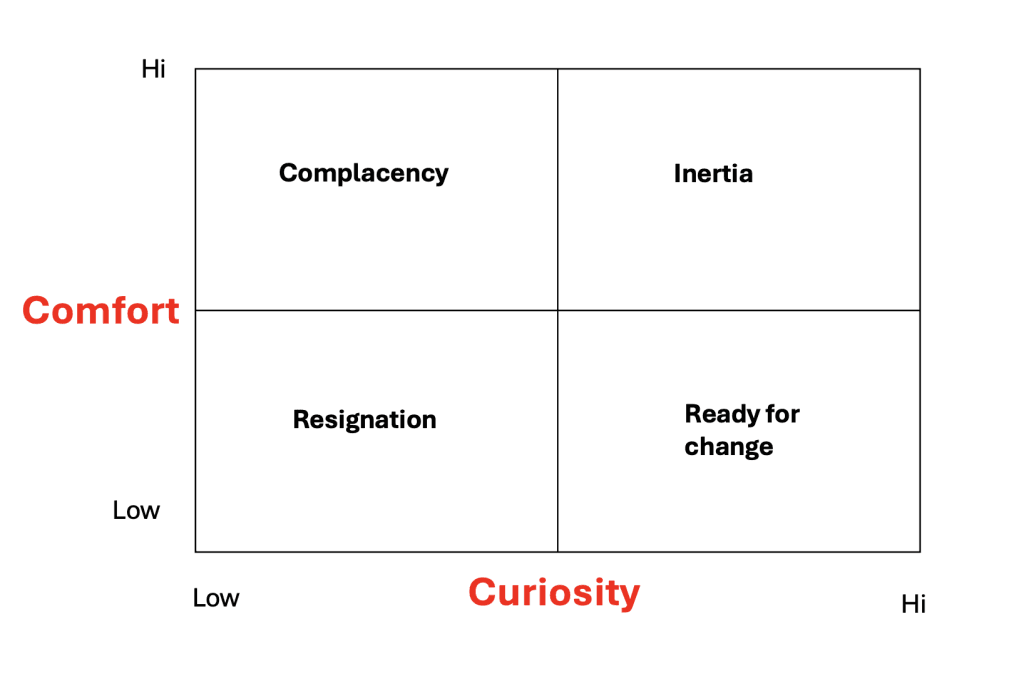
When someone has low comfort and low curiosity, they feel unhappy with the status quo, yet powerless to change it. They may also fear that any change would make things worse. This state we refer to as resignation.
When someone is happy with the status quo and fears that change may disrupt it, they are in a state of complacency.
For someone high in both curiosity and comfort, the idea of change is attractive, but either the motivation to make it happen is low (not enough gain for the pain) or they cannot see a clear path forwards. They are in a state of inertia.
Low comfort and high curiosity create a desire to change the status quo and openness to experiment. People in the ready for change quadrant are energised by the potential to progress and eager to create the space for new challenges.
Where we are on the matrix can fluctuate as circumstances change. My motivation to learn to lip read will be influenced by increasing frustration with missing conversations and by the volume of other pressing learning goals I have at the time. Recognising which quadrant we are in, however, allows us to create rational plans that take emotional drag into account.
© David Clutterbuck, 2026